


| Sl. No. | Teaching Methods |
|---|---|
| 1 | Youtube lecture series |
| 2 | Flipped classroom |
| 3 | Project based learning |
| 4 | Industry Institute interface |
| 5 | Virtual labs & Online learning resource |
| 6 | MOOCs |
| 7 | ICT enabled content delivery |
1. Statement of Clear Goals
The Department of Mechanical Engineering has clearly articulated goals for adopting innovative and ICT-enabled teaching–learning practices. The primary objectives are to,
- Improve conceptual clarity and application of core mechanical engineering subjects
- Promote active, student-centered and outcome-based learning
- Enhance self-learning, critical thinking, and problem-solving abilities
- Bridge the gap between theory and industrial practice
- Improve Course Outcome (CO) and Program Outcome (PO) attainment
- Prepare students for industry, higher studies, and lifelong learning
These goals are aligned with the Program Educational Objectives (PEOs), Program Outcomes (POs), and NBA Outcome-Based Education (OBE) framework.
2. Use of Appropriate Methods
To achieve the stated goals, faculty members have adopted the following innovative teaching–learning methods supported by ICT tools:
a. Faculty-Created YouTube Lecture Series:
Faculty develop and share course-specific video lectures through YouTube and institutional platforms. These videos supplement classroom teaching and enable students to revise difficult topics at their own pace.
b. Flipped Classroom Implementation:
Students are provided with video lectures, PPTs, and reading materials in advance. Classroom time is used for:
- Problem-solving sessions
- Case studies
- Group discussions
- Application-based learning
This method enhances active learning and student engagement.
c. Project-Based Learning (PBL):
Students work in teams to solve real-world engineering problems using ICT tools, simulations, and design software.
d. Industry–Institute Interface:
ICT platforms are used for expert talks, webinars, and virtual industrial interactions.
e. Virtual Labs and Online Learning Resources:
Faculty encourage the use of virtual laboratories, simulation tools, NPTEL, and SWAYAM resources.
f. MOOCs and Self-Learning Initiatives:
Students are motivated to enroll in MOOCs, and outcomes are integrated with course objectives.
g. ICT-Enabled Content Delivery and Assessment:
- PowerPoint presentations, animations, and simulations
- Online quizzes and formative assessments
- Digital sharing of notes and learning materials
3. Significance of Results
- Improved student engagement and participation
- Enhanced conceptual understanding and problem-solving ability
- Improved CO attainment and internal assessment performance
- Increased participation in projects, internships, and competitions
- Higher enrollment and completion of MOOCs
- Better industry readiness
- Positive stakeholder feedback
4. Effective Presentation
- Well-structured lesson plans aligned with COs and POs
- Use of PPTs, animations, simulations, and videos
- Integration of real-life and industrial case studies
- Uniform digital content delivery
Reflective Critique and Continuous Improvement
- Student feedback analysis
- CO attainment and gap analysis
- Peer review and academic audits
- Department-level review meetings
Corrective actions include refinement of strategies, enhancement of digital content, remedial classes for slow learners, and advanced activities for fast learners.
Conclusion
The department’s systematic adoption of ICT tools and innovative pedagogical practices demonstrates a strong commitment to Outcome-Based Education, student-centered learning, and continuous improvement, fully aligning with NBA accreditation criteria.
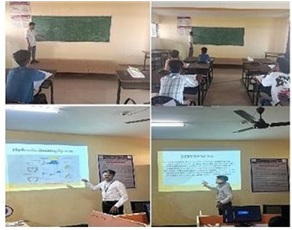
Flipped Classroom
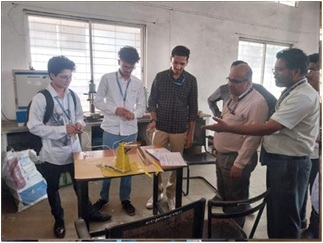
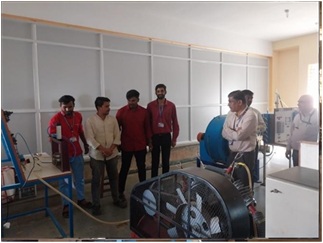
Project-Based Learning
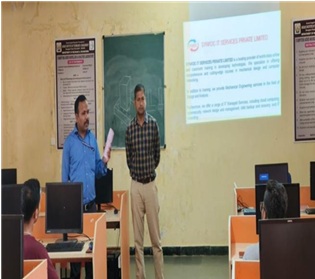

Guest Lectures